


Russell Hoban has died.
I first discovered his work, as I suspect so many others have done, through Riddley Walker. It is a book that looks off-putting, the broken language that reflects the broken society, but read it aloud and it is perfectly plain. There are other novels that have played with language in a similar way (Burgess’s A Clockwork Orange, Banks’s Feersum Endjinn), but none of them have quite the grace of Riddley Walker.


And having read Riddley Walker I had to rush out and read his previous novels, The Lion of Boaz-Jachin and Jachin-Boaz, Kleinzeit in which inanimate objects talk to the narrator, a device that he continued to use in most of his novels, and Turtle Diary in which the narrative shifts between the two central characters, again a device that he continued to use.
And not so long after Riddley Walker came out I was involved in organising the first Mexicon, and at least partly on my instigation we invited Hoban to be one of our guests, along with Alasdair Gray. It was an inspired choice that set the tone for how we wanted these conventions to be. We decided that I would interview Hoban on the convention programme, so he suggested I come round for lunch so we could prepare. Which is how I came to visit him at his home overlooking that stretch of the District Line that runs overground, a home that has subsequently featured in several of his novels.
The kitchen, where we ate, was clean and bright and tidy and clearly the domain of his wife. The ground floor lounge that served as his study was anything but. It was cramped and crowded and piled high with tapes and books and LPs, there was what seemed like a solid wall of radio equipment on which he listened to short wave radio all through the night while he wrote. It was the sort of room where you feel you have to breathe in in order to move around, the sort of room where you are convinced that piles of something or other are going to topple over at any moment. He talked to me about writing his first novel, when he didn’t know how to write a novel or what it was supposed to look like. So he laid all the pages diagonally across the floor and ran up and down the lines trying to get a sense of the rhythm of the thing. I suspect that is the reason all his books are made up of such short chapters.


And after Pilgermann, which was sort of an historical novel and sort of a ghost story, there was a long silence, broken only by The Medusa Frequency and that odd collection The Moment Under the Moment. Then came Fremder, a clunkingly awful little sf novel, but that was followed by Mr Rinyo-Clacton’s Offer and then Angelica’s Grotto and he was away on a whole string of seemingly linked novels in which characters and settings (usually London) kept recurring. There was an awful lot of sex, usually rather perverse, which seemed rather creepy coming from an author who was already well over 70; but there was also a mass of pop-culture references (Linger Awhile, which is one of the worst of this series, is all about bringing a black and white movie actress back to life), there were endless references to the ghost stories of Oliver Onions, the songs of Dory Previn, the paintings of Odilon Redon, and more. I’ve written about all this before at the New York Review of Science Fiction and here at Big Other, so there’s not much point in me repeating it all again.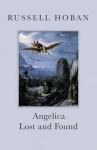

But I’ll miss him. I’ll miss the round face with the impish grin. I’ll miss the uncategorisable novels. I understand there’s a new young adult novel to be published early in 2012, but after that, how the silence stretches out.