

I don’t write much about music, but I have been immersing myself once again in the music of Pete Atkin and Clive James, so I thought I’d break the habit this once.
[Truth to tell, I’d originally envisaged this post as like one of Adam’s, punctuated with youtube clips, but I’ve only found this one:

from the period in question, so you’ll have to make do with that.]
Pete Atkin and Clive James apparently met in the Cambridge Footlights during the late 1960s, and started writing songs together almost immediately. James wrote the words, Atkin wrote the music (except, of course, for ‘The Original Original Honky Tonk Night Train Blues’, words & music Atkin:
I’ve always loved the way really clever writers like Cole Porter would break a word for the rhyme, and to give a little cognitive shock to the listener. Ah, but back to the story …)



So what is it about the songs that makes them work so spectacularly for me? The first thing to be said is that, with all due deference to Atkin’s music and singing, they are songs in which the lyrics come first. They are writers’ songs, full of casual allusion, intellectually flattering. They make you think, but they also make you think how clever you are for spotting all the references. (On Pete Atkin’s website there are annotated copies of many of the lyrics – some of which I’ve linked to here – and when I read those the geek in me keeps thinking, ah yes, but you still missed this reference …)
Having said that, as I noted in my report on the concert, at one point Clive James read ‘The Last Hill That Shows You All The Valley’ as a poem, then Atkin performed it as a song. The difference was memorable. As in the chansons of Brel and Brassens (other than Atkin and maybe Jake Thackray, we don’t really have a similar tradition in Britain) the music is generally fairly simple, designed to present the lyrics in the best way possible. Which is helped by Atkin’s superb diction, which means that even in the technically complex passages every word is clear. The simplicity, of course, helps to make them lodge in the memory more easily. But we shouldn’t miss the fact that there’s quite a musical variety in the work. In the notes accompanying the recent re-release of one of these discs Atkin complains that he kept writing music he couldn’t sing (specifically ‘Our Lady Of Lowness’ which really calls for a voice more akin to Joe Cocker), but still you’ll find echoes of folk and rock, of showtunes and music hall, and jazz. (In the notes accompanying the re-release of The Road of Silk, both Atkin and James are like star-struck kids when they talk about how they got tenor saxophonist Tony Coe to play on some of the tracks.)
Okay, from here on in, let’s talk about lyrics.
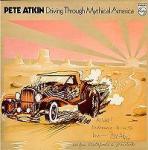
The title track on the second LP encapsulates several of the things that are unavoidable in Clive James’s lyrics. In the first place, there’s the political content:
Four students in the usual light of day
Set out to speak their minds about the war
This must have been written within days, at most weeks, of Kent State. But you see it elsewhere in their discography, also. “All The Dead Were Strangers” –
– is a response to My Lai, or rather, to the fact that in September 1971 Captain William Calley was the only man to be convicted.
But alongside this visceral hatred for what America was doing in and because of Vietnam, there was an intense fascination with American popular culture, particularly American film. (Remember, James would go on to be a very knowledgeable film critic.) So the four students killed at Kent State, for instance, find themselves the victims the victims of Hollywood mythology:
Four students had to take it in their stride
And couldn’t feel the road beneath the wheels
Of the car they didn’t know they road inside
Across the set and through the cardboard hills
American popular mythology is something that keeps recurring in all these albums, for instance in ‘Screen-freak’ (quoted above) or ‘Apparition In Las Vegas’:
But alongside this fascination with popular culture is an equal fascination with a more personal mythology, a sort of historical mash-up hinted at in the political references I mentioned earlier.
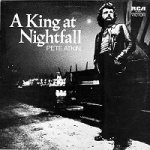
But more than a specific sense of history, mangled as it may be in songs like ‘The Last Hill That Shows You All The Valley’, or timeless in ‘Sunlight Gate’:
there is a sense of the past as a tenebrous, fragile thing that yet marks us for who we are:
This is a sense that goes right back to their earliest songs:
And it often involves an intense social awareness. For instance, in ‘Carnations On The Roof’, a song about the funeral of a working man, after being told that ‘Forty years of metal tend to get into your skin’, we come to the moment of cremation:
And I could keep going on, but ‘my story’s over in its basic essentials, the rest is merely overlaying’. But I would just like to mention a couple of songs that fit tangentially with all I’ve been saying and without mention of which nothing about Pete Atkin and Clive James would be complete. There’s the sharp characterisation, for instance the tetchy fortune teller in ‘Beware Of The Beautiful Stranger’:
And there’s the fact that Clive James’s images are often just simply beautiful. Indeed it was this that first made me a fan. On that first album I bought there’s a song called ‘The Prince Of Aquitaine’ (yes another literary reference) that haunted me from the first moment I heard it. It still plays irresistibly through my head every single time I get on a plane:
But no, I have to stop. The only way to do justice to the songs of Pete Atkin and Clive James is probably to write down the lyrics for every single song, and this is too long anyway. But I’ve been listening to the albums again recently, and the songs are still as fresh and complex and absorbing as ever. So I do what I can to pass on the news.
Though I would just like to mention the thing on the front that always comes in handy when you want to catch cows …