

Below are two renditions of a scene from the life of St. Anthony of the Desert, who once was a popular subject for artists; the first is by Salvador Dalí, and the second is attributed to Michelangelo (apparently painted when he was 12 or 13).

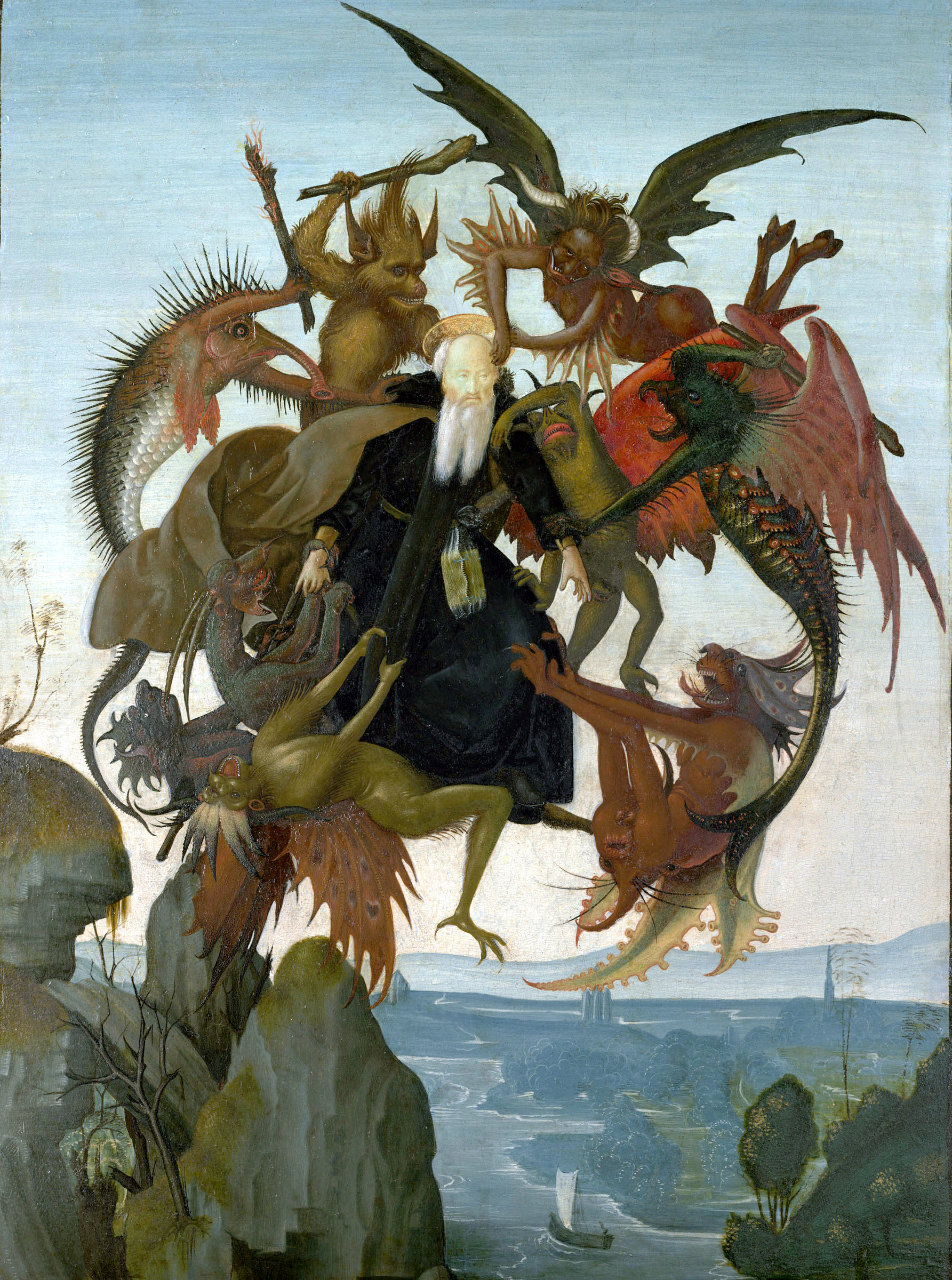
Stylistic differences aside (Dalí’s surrealism is a departure even from that of Michelangelo’s), the two interpretations might be considered similar except that they approach the notion of spiritual ‘warfare’ so differently. Consider St. Anthony’s appearance. In the first painting, he is naked, thrusting a crucifix forward while he genuflects, and, though his face is hidden, the tension in his muscles and the rigidity of his posture suggest effort. In the second painting, he is clothed (in a monk’s robe), his expression is composed, even serene, and his body is relaxed despite being molested by demons. In short, while the first painting depicts his resistance as active, or involved, the second painting depicts it as passive, or detached.